


At almost every inflection point in my career, I knew at least one designer who was convinced the new thing was the death of the art form.
Photoshop was going to end traditional illustration. Web-based builders were going to make designers obsolete. Drag-and-drop tools were going to commoditize everything. Stock photography was going to kill original visual thinking. And now AI. AI is going to end creativity itself, replace human designers entirely, produce a world of machine-generated sameness from which genuine artistry cannot survive.
None of the previous ones were right. I don't think this one is either.
The Rise of Fast Design and What We Lose Because of It
Browse by Category
A client’s guide: practical answers for people hiring a designer or building a site.

What human design offers that AI can’t replicate

Making your website work harder, for your business and in search

The craft: what makes things look and feel right

The why: how design makes people think, feel, and trust


In February 2015, a Tumblr user posted a washed-out photo of a dress with a simple question: is this white and gold, or blue and black? Within days, the image had divided the internet, made its way onto morning television, and become one of the most studied optical phenomena in modern vision science. I was […]
Trust is not a conclusion. It’s a feeling. And online, it forms faster than most people realize. Research puts it at around fifty milliseconds for an initial visual impression, though the trust signals that follow in the first few seconds are what determine whether that impression holds. By the time a visitor has scrolled past […]
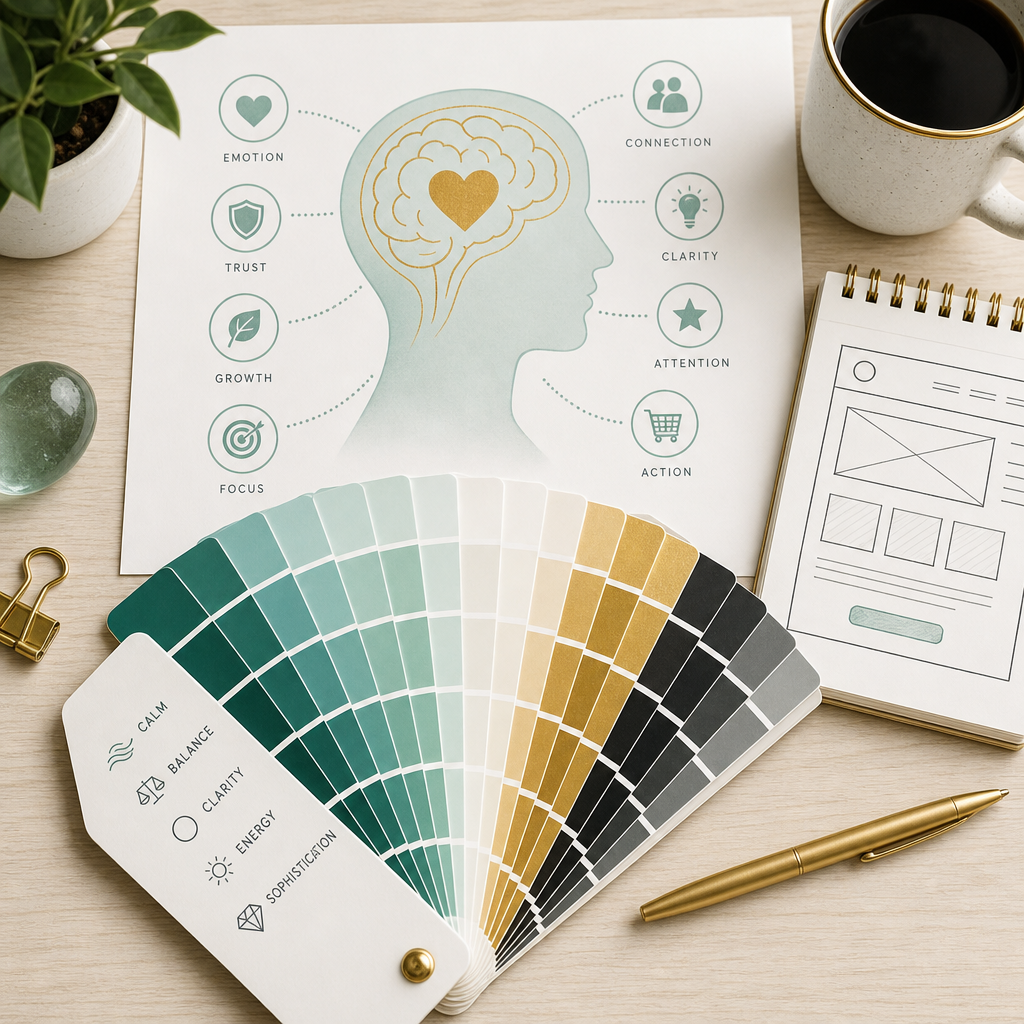
Before you read a single word on a website, you feel something. That feeling — the one that happens in the first fraction of a second, before your conscious mind has processed anything — often comes from color. The brain responds to it almost instantaneously, faster than it processes language, faster than it evaluates layout […]

the designer
Nicole has been in design for thirty years, across television, advertising, academia, and now this. Every Kismet project runs through her from start to finish.
It was always going to end up here. It just took thirty years to figure it out.


